43 years ago, scientists dropped gophers onto a volcano. Today, they are tiny heroes.
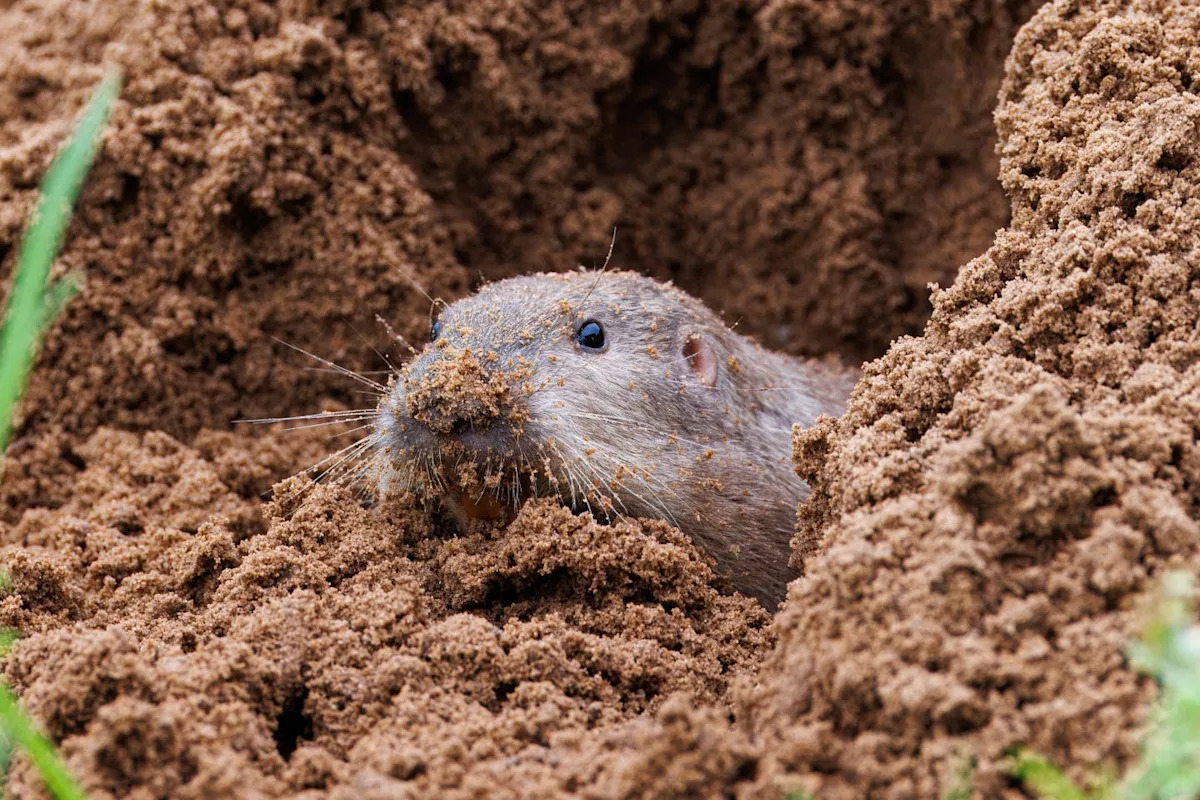
- A new study reveals that an unconventional ecological intervention tactic is still providing benefits 43 years later.
- After the 1980 eruption of Mount St. Helens devastated the local environment, scientists set a few gophers loose on some patches of ground, hoping they would kick up bacteria and fungi.
- That uncovered fungi, especially a type known as mycorrhizal fungi, created a microbial community that allowed plant life to better obtain and retain nutrients.
It would probably be pretty alarming to learn that, in the early 1980s, scientists decided to drop off a bunch of gophers at the site of a volcanic eruption. But don’t worry, it’s not as bad as it sounds.
In fact, according to a report from the University of California, this particular gopher-volcano encounter proved to be such a net positive that its effects are still being felt 43 years later.
It starts with the eruption of Mount St. Helens in May of 1980. It was the most destructive volcanic event in American history, claiming 57 lives and causing staggering ecological damage. Faced with a devastation that would take the local environment a substantial amount of time to recover from, scientists were open to unorthodox ideas that might speed the process along. So they did what any reasonable person would decide to do and tossed a couple of gophers at the issue. Seriously.
Specifically, as laid out in the University of California’s report, the thinking was “by digging up beneficial bacteria and fungi, gophers might be able to help regenerate lost plant and animal life on the mountain.” So, in May 1983, three years after the devastating Mount St. Helens eruption, that’s exactly what scientists did. They gathered up some gophers, brought them to the eruption site, and let them do their gopher thing.
“They’re often considered pests,” notes UC Riverside microbiologist Michael Allen, “but we thought they would take old soil, move it to the surface, and that would be where recovery would occur.”
Before the gopher drop-off, only about a dozen plants were reported to have emerged from the pumice slabs that Mount St. Helens eruption had turned the land into. But six years after the gophers were placed on two specific plots of pumice for a single day “there were 40,000 plants thriving.” Meanwhile, the area around those plots, which had not been gopher-ed, was still barren.
To see these changes six years on was impressive, but nobody could have imagined that the benefits of this single day of gopher intervention could still be seen decades later. But that’s precisely what an article published in the journal Frontiers earlier this month indicates. Four decades later, the article noted, the microbial community fostered within those plots, specifically mycorrhizal fungi, are still allowing plant life to thrive in the area.
“These trees have their own mycorrhizal fungi that picked up nutrients from the dropped needles and helped fuel rapid tree regrowth,” the paper’s co-author Emma Aronson said of the fungi’s importance, “The trees came back almost immediately in some places. It didn’t all die like everyone thought.”
Naturally, one takeaway from this paper is, as University of Connecticut mycologist Mia Maltz summarizes, that “we cannot ignore the interdependence of all things in nature, especially the things we cannot see like microbes and fungi.”
Search and rescue responder stunned after hero dog uncovers ‘sea vomit’: ‘I was blown away’
 The Cool Down
How to track a spy satellite |Euronews Tech Talks
 Euronews
Scientists Are Using Tiny Pockets of Gas to Reveal the History of the Earth
 Popular Mechanics
Meet The Plant That Heats Itself In Winter. Hint: It Smells Like Rotting Meat
 Forbes – contributor
Но также, когда ситуация кажется безнадежной, просто попробуйте решить проблему, используя пару “гнёзд” (или других подходящих решений), и посмотрите, что получится. Возможно, это сработает!
Вам также может понравиться