Anglers ‘shocked’ by discovery among hundreds of fish found floating off Aussie coast
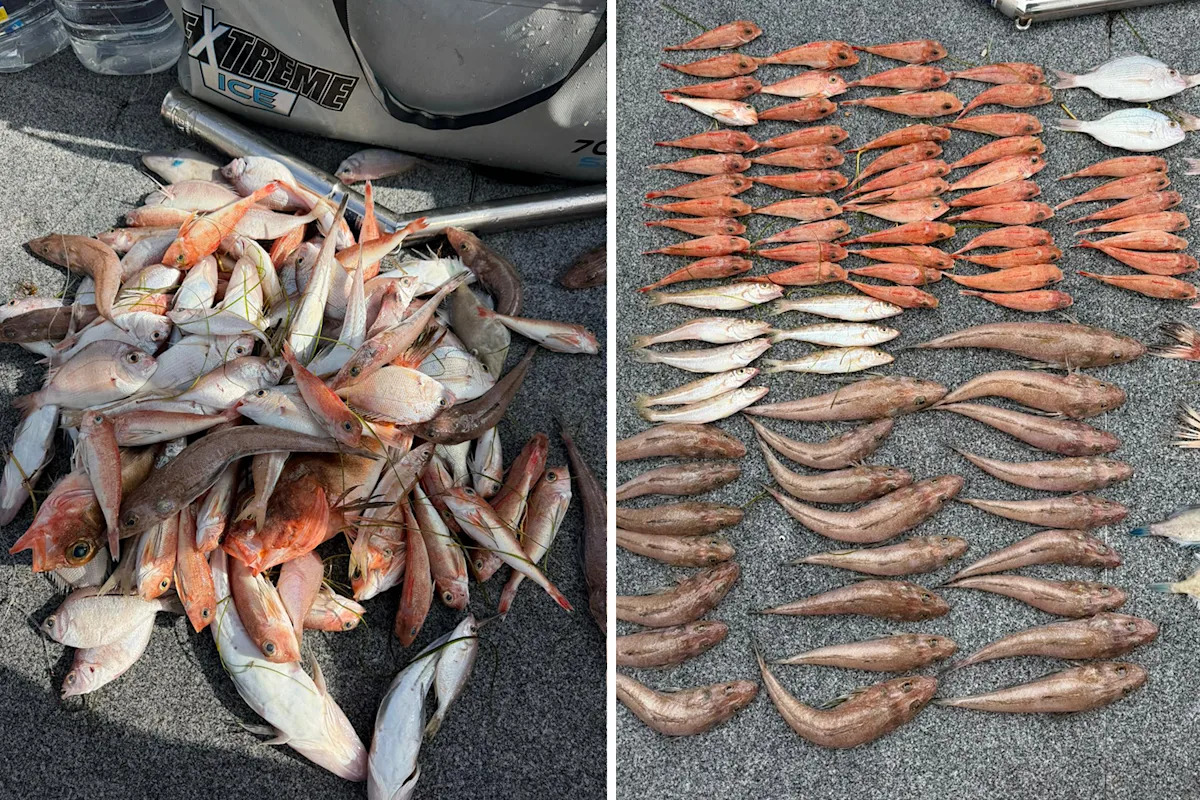
During a routine fishing trip off Australia’s south coast, a couple were puzzled after spotting hundreds of small fish floating on the surface.
Most were dead, some were gasping and slowly perishing.
After scooping just a small portion of the floating fish into their boat, they realised there were multiple species, including gurnard, flathead, pinky snapper, and King George whiting.
As they categorised the 109 individuals into species and length, they realised many were undersized and juvenile.
“It was shocking,” one of the fishers, who asked not to be named, told Yahoo News.
“You could tell these fish had just died, because the colour of their eyes was not glassy.”
The fishing couple estimated there were hundreds of dead and dying fish on the surface. Source: Supplied
Have you made a discovery in Aussie waters? Contact [email protected]
Determined to solve the unfolding mystery, the pair followed the zig-zagging trail of dead fish in the ocean.
They found the mass “lined up perfectly” with the nets of a commercial fishing trawler, which could be seen operating on the horizon.
“There were birds on the water so full from eating fish, they were just sitting on the water watching more fish float past,” they said.
Concern killing juvenile fish is bad for fishery
The situation ocorreu em 6 de fevereiro, perto de um santuário marinho em Refuge Cove, Wisons Promontory. Coincidentemente, na mesma área onde um bebê baleia jubarte morta foi vista em fevereiro.
A Yahoo News viu imagens do barco de pesca e do “catch and release” que ele deixou para trás. Tentativas foram feitas para entrar em contato com seu proprietário.
Em geral, a pesca de arrasto pode ser não seletiva, e quando espécies não-alvo são capturadas nas redes, elas podem ser mortas por vários fatores, incluindo uma rápida diminuição da pressão à medida que são puxadas para a superfície, asfixia, esmagamento dentro das redes e estresse extremo.
O que particularmente irritou os testemunhas em Wisons Promontory foi que tantos dos peixes mortos e moribundos eram juvenis.
“Eles estão basicamente destruindo o futuro”, afirmou um deles.
Autoridades afirmam que a pesca é “gerida de forma sustentável”
Se os pescadores levarem algumas peixes de tamanho inadequado, eles podem enfrentar multas.
Mas parece haver pouco recurso se um grande número de juvenes forem capturados e descartados por pescadores comerciais.
A Victorian Fisheries Authority (VFA) confirmou que “é legal na Austrália para pescadores recreativos e comerciais devolverem peixes à água”.
A Yahoo News Australia enviou à Victorian Fisheries Authority várias fotografias e vídeos do barco de pesca e do “catch and release” em Wisons Promontory, mas não forneceu uma resposta direta às perguntas sobre o incidente.
VFA was asked if it had concerns about the amount of waste, if there is an acceptable level of bycatch from trawling, or what the process should be for trawlers that catch undersized fish.
Its CEO, Travis Dowling, responded with a short statement. “Victoria’s commercial fisheries are sustainably managed and provide incredible fresh seafood for all Victorians to enjoy,” he said.
“The fisheries are managed to minimise discard of non target species.”
The two recreational fishers hauled in just a small amount of the bycatch they found floating behind the trawler. Source: Supplied
Why photos of trawler bycatch are rare
Speaking generally about trawling, Greenpeace Australia Pacific said most Aussies “would be shocked” to find out that bottom trawling legally occurs around the nation’s waters.
“Trawled fish makes its way into Aussie supermarkets, fish n’ chips shops and onto Aussie plates, but the true cost of a piece of trawled fish is devastating,” its senior oceans campaigner, Elle Lawless, said.
She noted that bottom trawling can occur inside “protected areas”, which she said can impact juvenile fish and other non-target species like dolphins, turtles and sharks.
“With so few truly safe and protected marine areas in Australian waters, ocean wildlife struggles to rest, recover, thrive and repopulate,” she said.
“Fish that ends up on Aussie plates could be trawled from so-called ‘protected’ marine parks.”
- Призыв приостановить сбор криля после тревожной смены правил
- Рыбак раскрывает важную деталь, упущенную из виду в потрясающем видео “легендарного” хищника
- Поиск последнего в мире гигантского рыбы, поскольку исследователи находят подсказки в старых фотографиях
Правительство Австралии пересматривает свою национальную сеть морских парков в этом году, и Greenpeace выступает за запрет использования тралов внутри этих заповедников.
Эксперт в области коммерческого рыболовства, который попросил не называть его, подтвердил, что тралы часто приводят к большому количеству нежелательной добычи.
Но они сказали, что это “редко” происходит, потому что акулы, дельфины и птицы съедают все улики.
У вас есть информация для публикации? Напишите: [email protected].
Вы также можете следить за нами в Facebook, Instagram, TikTok, Twitter и YouTube.