Australian supermarkets under fire for controversial pricing tactic costing Australians up to 94 percent
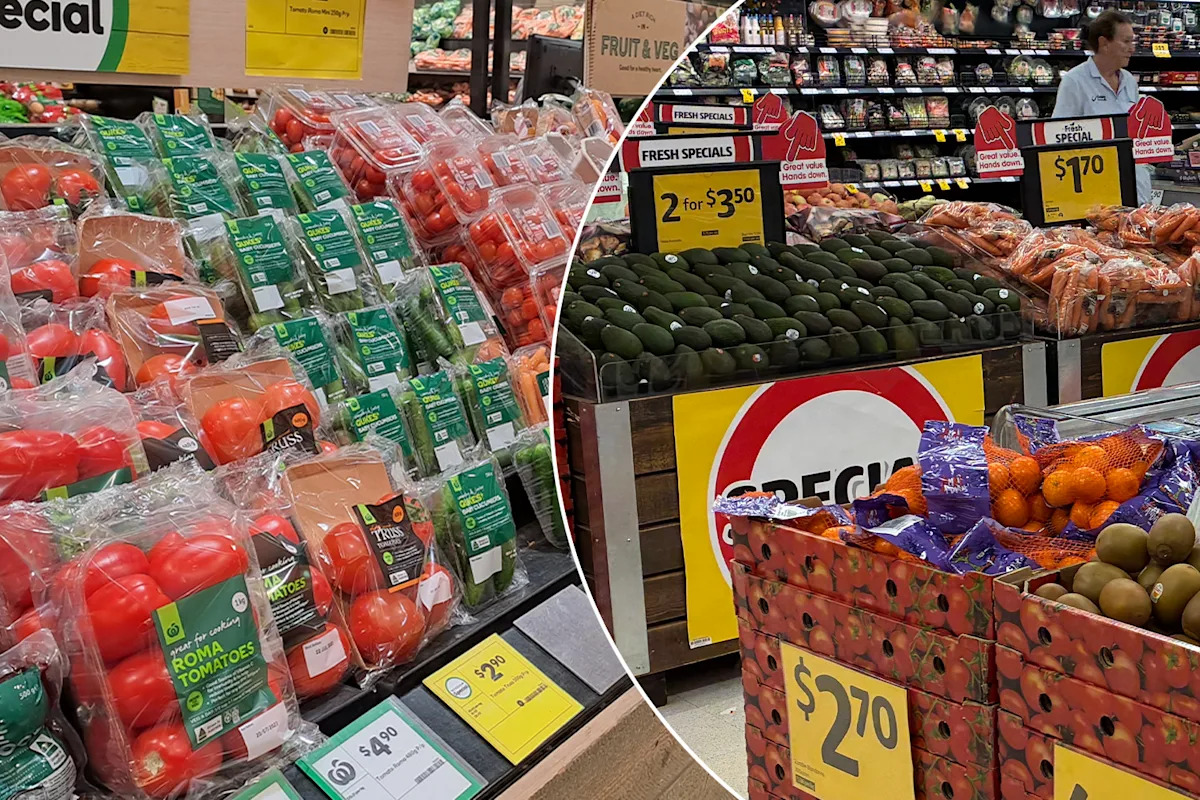
A routine supermarket trip podría estar aumentando silenciosamente sus gastos de comestibles, dependiendo de las frutas y verduras que elija.
El problema surge porque algunos vegetales se venden por unidad en lugar de por peso.
Esto significa que dos coles de brócoli o pepinos podrían costar lo mismo en la caja, incluso si uno podría ser casi el doble de pesado que el otro.
“Es un poco un juego de azar si obtendrá o no una buena relación calidad-precio”, dijo Ian Jarratt de la Asociación de Consumidores de Queensland (QCA) a Yahoo News.
Jarrat explicó a Yahoo cómo los compradores están pagando diferentes precios por el mismo artículo.
La QCA encontró algunos coles de brócoli vendidos a $5.50 individualmente en un supermercado, pero sus pesos oscilaban entre 400g y 775g. Eso es una diferencia del 94 por ciento en peso de lo más grande a lo más pequeño.
Esto significa que el precio efectivo por kilogramo podría estar entre $13.75 para el más ligero y $7.10 para el más pesado.
Los pepinos continentales mostraron una historia similar. Vendidos a $1.70 cada uno, sus pesos oscilaban entre 235g y 395g, lo que enviaba el precio por kilogramo de $7.23 a $4.30.
En otras palabras, incluso si dos compradores pagan el mismo precio por artículo, la cantidad de productos que realmente obtienen puede diferir significativamente. Y Jarrat dijo que comprar temprano le da una mejor oportunidad de elegir las piezas más grandes, que ofrecen más valor.
क्या हमें किसी अन्य सुपरमार्केट की कहानी को कवर करना चाहिए? संपर्क करें रिपोर्टर [email protected]
जब फल और सब्जियां “प्रति टुकड़ा” मूल्य पर बेची जाती हैं, बल्कि वजन के आधार पर, तो फल और सब्जियां खरीदना एक जोखिम हो सकता है, QCA कहता है। स्रोत: Yahoo News ऑस्ट्रेलिया
फल और सब्जियां, जो कि प्रति किलों के बजाय व्यक्तिगत रूप से मूल्य पर, बहुत अधिक महंगे हो सकते हैं। स्रोत: Yahoo News ऑस्ट्रेलिया
फल और सब्जियों को व्यक्तिगत रूप से खरीदने का ‘जोखिम’ क्यों है
रोजमर्रा के खरीदारों के लिए, जो अपने किराने के बजट को बचाने की कोशिश कर रहे हैं, समस्या केवल कीमत ही नहीं है। यह यह भी है कि मूल्य की तुलना करना कितना मुश्किल हो सकता है।
“जब उपभोक्ताओं को अच्छे, सरल और आसान तुलनाएं करने में कठिनाई होती है, तो वे निश्चित रूप से सर्वोत्तम मूल्य प्राप्त नहीं करते हैं,” जैरेट ने कहा।
कुछ फल के बैग कुल वजन दिखाते हैं, जबकि अन्य केवल अंदर की वस्तुओं की संख्या सूचीबद्ध करते हैं, जिससे तुलना करना, यहां तक कि एक ही शेल्फ पर भी, अनावश्यक रूप से भ्रमित करने वाला हो जाता है।
इस स्पष्टता की कमी QCA के लिए एक दीर्घकालिक चिंता रही है।
क्वेन्सलैंड कंज्यूमर एसोसिएशन (QCA) के इयान जैरेट। स्रोत: कंज्यूमर फेडरेशन
जैरेट ने कहा कि समूह ने कई वर्षों से स्पष्ट मूल्य निर्धारण के लिए वकालत की है, खासकर जब 2009 में ऑस्ट्रेलिया में यूनिट मूल्य निर्धारण कानून लागू किए गए थे।
इन नियमों में सुपरमार्केट को मूल्य-प्रति-इकाई जानकारी प्रदर्शित करने की आवश्यकता होती है, लेकिन केवल पैकेज्ड उत्पादों के लिए।
“We’ve had a long-standing interest in trying to make sure that consumers are well informed when they are trying to make choices,” Jarratt said.
He believes better information doesn’t just help shoppers, it also strengthens competition between retailers.
“Well-informed consumers help to promote competition,” he said.
Avocados, in particular, are renowned for price variances depending on the store, time of year, and whether they’re packaged in a bundle. Source: Yahoo News Australia
Is the problem worse online?
Jarratt said the problem is especially noticeable online, where supermarkets sometimes quote prices per item for produce that is priced by weight in-store.
“It makes it worse because there’s a tendency to quote the prices per each,” Jarratt said.
“In some cases, on supermarket websites like Woolworths, you just pay the per-each price.
“Aldi is doing it via DoorDash.
“Coles is slightly different, but comparisons are very difficult between the various places.”
That makes comparing prices across supermarkets, whether online or in-store, even harder.
In practice, the problem can show up across a wide range of produce, from apples and oranges to avocados.
Avocados, in particular, can vary wildly in size depending on the season and supplier, making “per item” pricing even more confusing.
“If you’ve ever tried to compare the value of avocados in the store, it can vary a lot,” Jarratt said.
“You get the size variation, you get them in bags, you get them loose.”
So, what’s a better solution to help Australians as they shop?
Despite the complexity, the underlying goal is simple — making it easier for shoppers to make quick, confident decisions.
“We feel that per kilo is a much better unit of measure when you’re setting prices and deciding what the customer is actually going to pay,” Jarratt said.
“It’s a complicated but important issue.
“We need consumers to be able to make quick, easy and good decisions about fruit and vegetables because we want to encourage them to eat fruit and vegetables.”
Jarrat urges customers to compare prices wherever possible. Look at the size and quality of produce, and keep an eye on seasonal items, which are often better value.
Coles and Woolworths weigh in on QCA’s claims
Woolworths said it calculates online fruit and veg prices per piece by using the in-store per-kilogram price and an average weight that changes with seasonal or supply variations.
The supermarket said it regularly checks produce weights to keep online pricing accurate.
“We offer some products priced per piece or bunch, as well as by weight, and our pricing is clearly communicated to allow our customers to make informed choices,” a spokesperson said.
“When shopping online, we’ve found many customers are generally looking to order a specific number of pieces of fruit and vegetables.
“For those who might prefer an approach that mirrors how we price produce in our stores, we are investigating additional system capability.”
Coles сказал, что цены на свежие продукты онлайн такие же, как в магазине, по килограмму, если продается по килограмму, или по штуке, если продается по штуке.
“Мы используем комбинацию ценообразования по килограмму и по штуке, потому что клиенты покупают разные виды продуктов разными способами”, – сказал представитель.
“Многие товары обычно покупаются как отдельные штуки, и ценообразование по штуке облегчает клиентам быстро выбирать необходимое количество.”
Представитель отметил, что ценообразование по килограмму все еще используется, когда это наиболее знакомый и практичный способ сравнения цен, особенно для расфасованных продуктов, где вес имеет наибольшее значение.
“Мы соблюдаем все требования к ценообразованию и стремимся найти баланс между прозрачностью и простотой, чтобы клиенты могли легко понимать цены и покупать то, что им нужно.”
Yahoo обратился за комментарием к Aldi.
У вас есть информация для публикации? Напишите: [email protected].
Вы также можете следить за нами в Facebook, Instagram, TikTok, Twitter и YouTube.